
I first visited Corfu only a few years ago, and somehow I’ve already been back three times. I think that tells you pretty much everything you need to know about how quickly this Greek island won me over.
But with so many beautiful beaches, charming villages and coastal resorts to choose from, deciding where to stay in Corfu can be surprisingly tricky. Do you want to wake up beside a turquoise bay, wander the streets of Corfu Town, stay somewhere quiet and romantic, or be close to the island’s nightlife?
I’ve had the chance to explore quite a few different places, and in this guide, I’ll break down what each of my favorite areas is like and who I think it suits best. I’ll also share some of my favorite hotels and accommodation options.

Where to stay in Corfu
Corfu may look fairly small on a map, but different areas have different personalities. There are several popular resort towns dotted around the island, but a lot of visitors stay in Corfu Town or just north of it.
To give you a general idea, the east and northeast coast is sheltered by Albania and the Greek mainland, so the water is often calmer and clearer than on the more exposed west coast. This is also where you’ll find lots of pretty little coves.
While the west coast is more exposed to the open Ionian Sea, the water is colder, but that also means dramatic cliffs, bigger waves, beautiful sandy beaches and spectacular sunsets. Look towards the southwest and inland parts of the island to escape the summer crowds.
There are, of course, many more areas than I cover in this article, but these are my favorite places to stay in Corfu.
Corfu Town — for shopping, restaurants & easy connections
Mon Repos – for a greener, yet central stay
Paleokastritsa — for beautiful beaches and scenery
Kassiopi (and the northeast) — for pretty coves and luxury properties
Agios Georgios Pagon — for beaches and hiking
Sidari & Acharavi — for unique cliffs and sandy beaches
Agios Georgios Argyrades – for relaxation and mile-long beaches
Pelekas – for a traditional village experience & views
Corfu Town
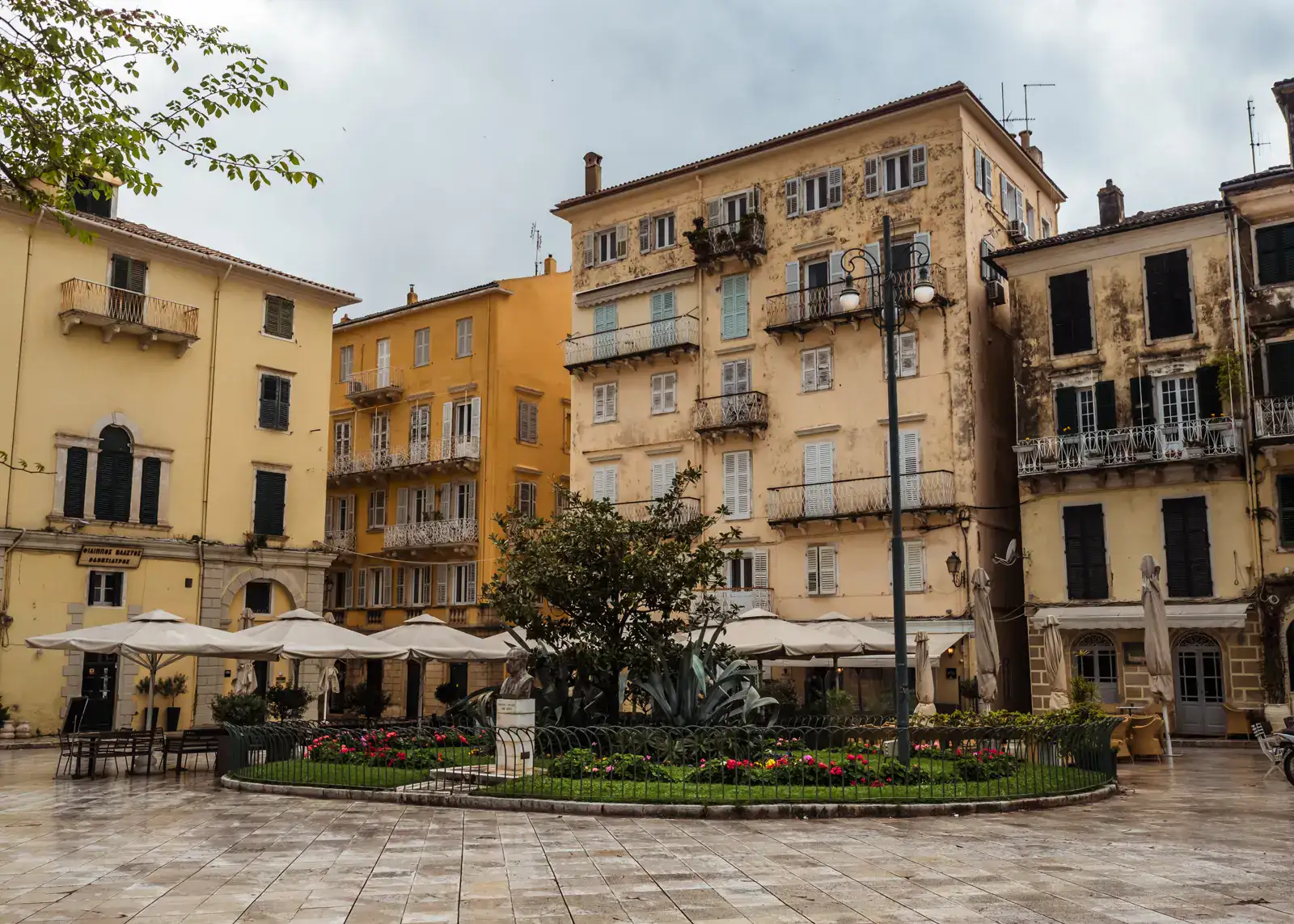
Corfu Town is the island’s historic and cultural heart, with a beautiful UNESCO-listed Old Town filled with narrow Venetian streets, colorful buildings, charming squares, restaurants and bars. It’s also a great base if you want to explore Corfu without a car, thanks to the island’s bus connections from the town.
I personally prefer to stay a few days in Corfu Town and then move to another area with better beaches.
Be sure to also check out my complete guide to Corfu Town.
✅ Staying in Corfu Town means you’ll have plenty to do right outside your door, from wandering the narrow streets to visiting the Old and New Fortresses, to great shopping and hopping on a bus to explore other parts of the island. It’s also conveniently close to the airport and ferry port.
❌ The downside is that Corfu Town isn’t the place to stay for a classic beach holiday. The Old Town gets very busy in summer, and some accommodations can be noisy, especially around the main streets and nightlife. If you’re renting a car, parking can also be a bit of a headache.
My top accommodation pick >> The best apartments I’ve stayed in are Modern Vintage Old Town Suites. They are beautiful and in a great location, just outside the historic center. I also love Bella Venezia, a historic boutique hotel housed in a gorgeous neoclassical mansion.


Mon Repos
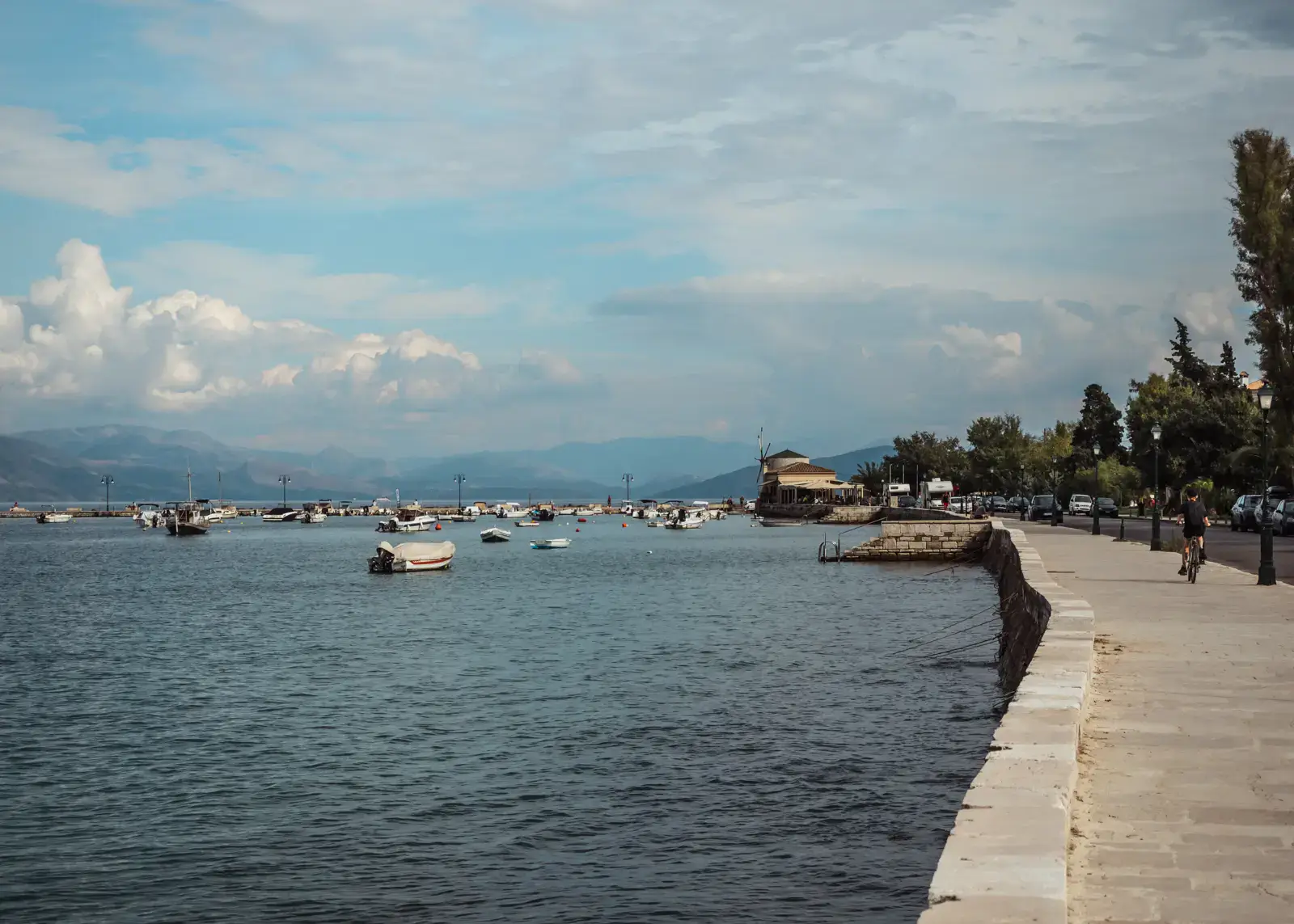
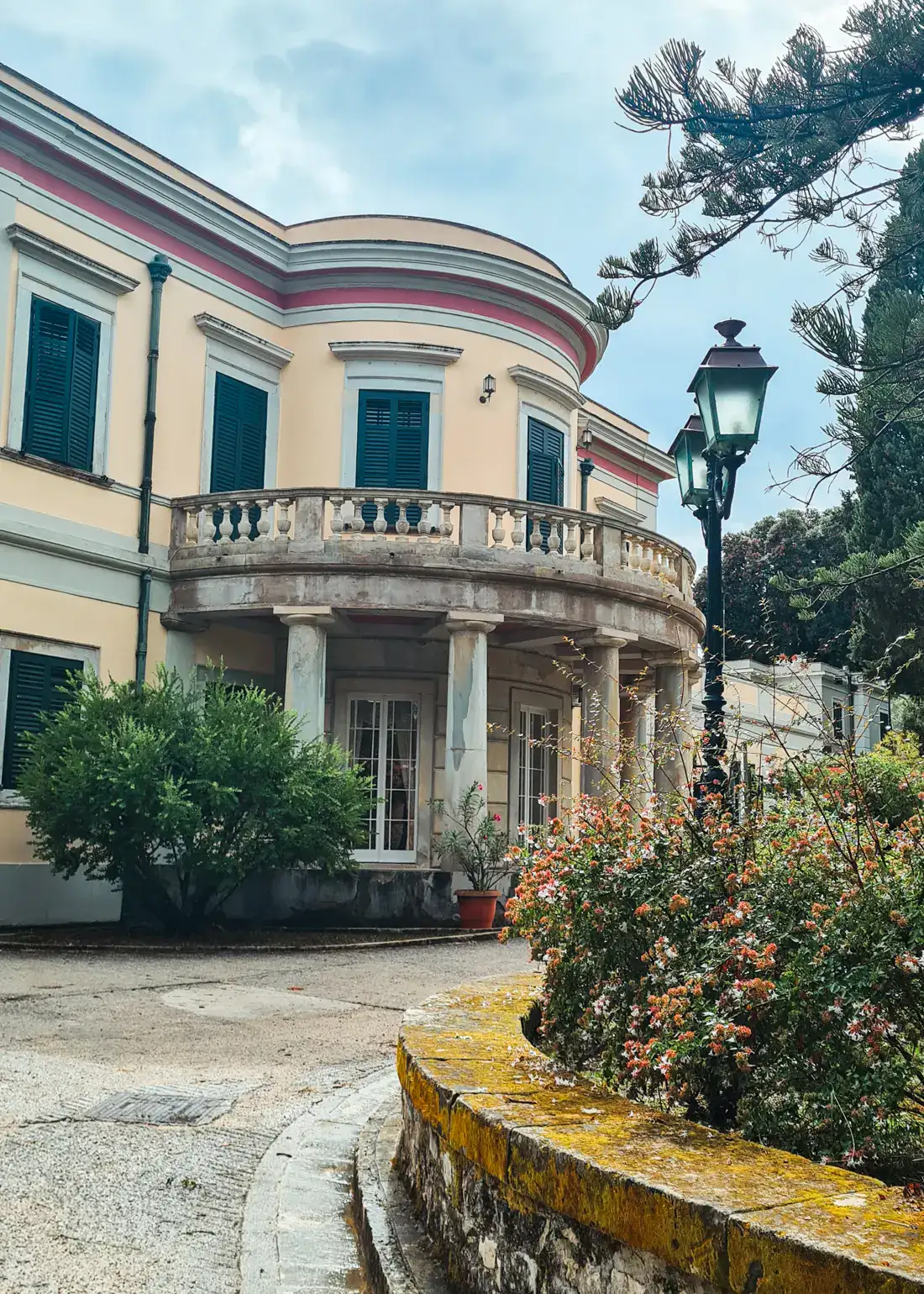
Technically, Mon Repos is part of Corfu Town, but staying here feels quite different from staying in the historic Old Town. I really loved this area when I visited outside the main summer season. You have Mon Repos Park and plenty of greenery right on your doorstep, while the waterfront promenade offers some great spots for swimming.
✅ I love that you get the best of both worlds here. You can walk into Corfu Town for dinner, drinks and sightseeing, then come back to a much quieter and greener neighborhood. The waterfront is lovely for an evening stroll, and outside the busy summer months, the area feels noticeably more local and residential than the Old Town.
❌ There are also fewer attractions, restaurants and bars immediately around your accommodation, although that’s partly what makes Mon Repos feel more peaceful.
My top accommodation pick >> I spent several weeks in this 2-bedroom apartment and loved it.
Paleokastritsa
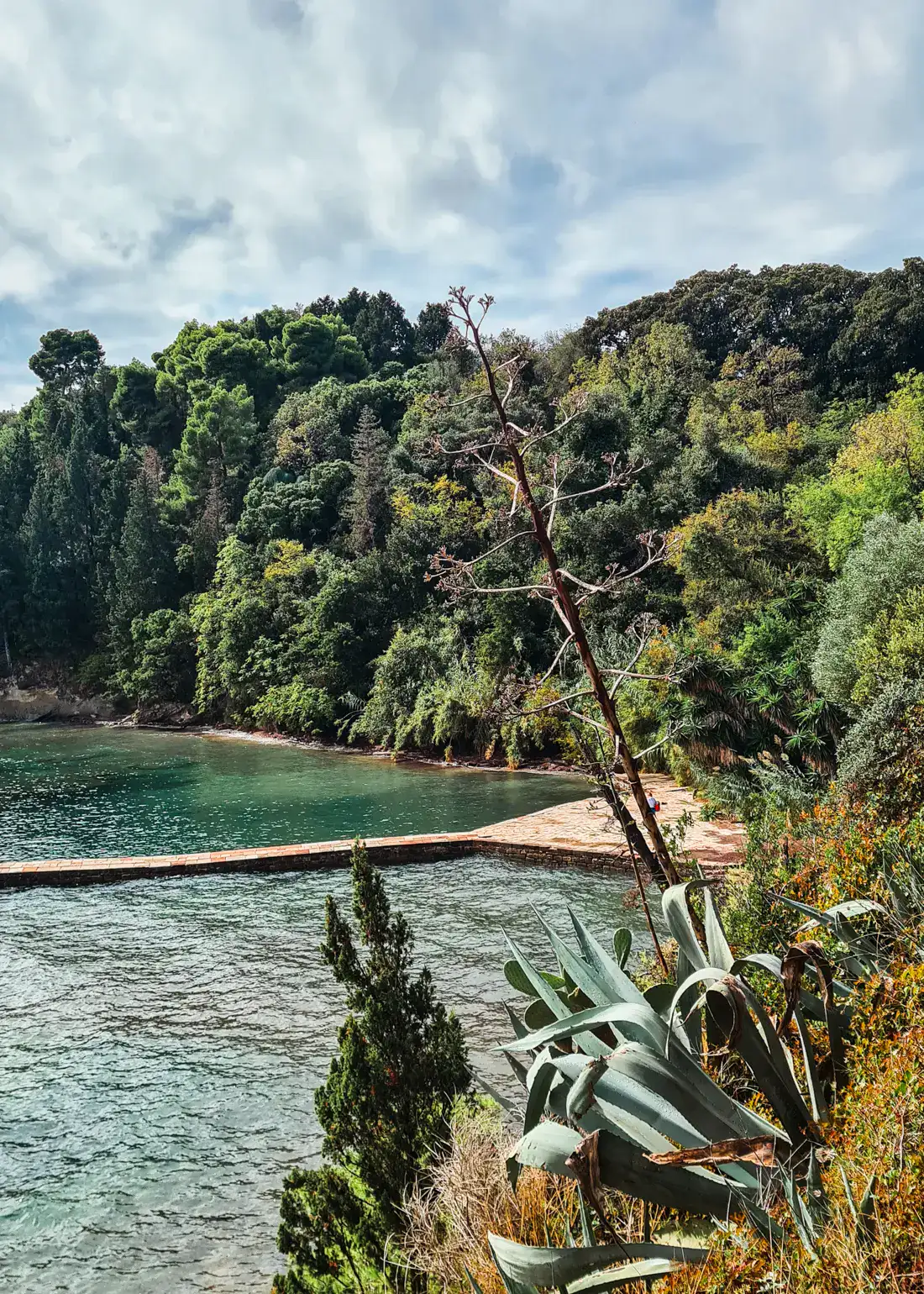
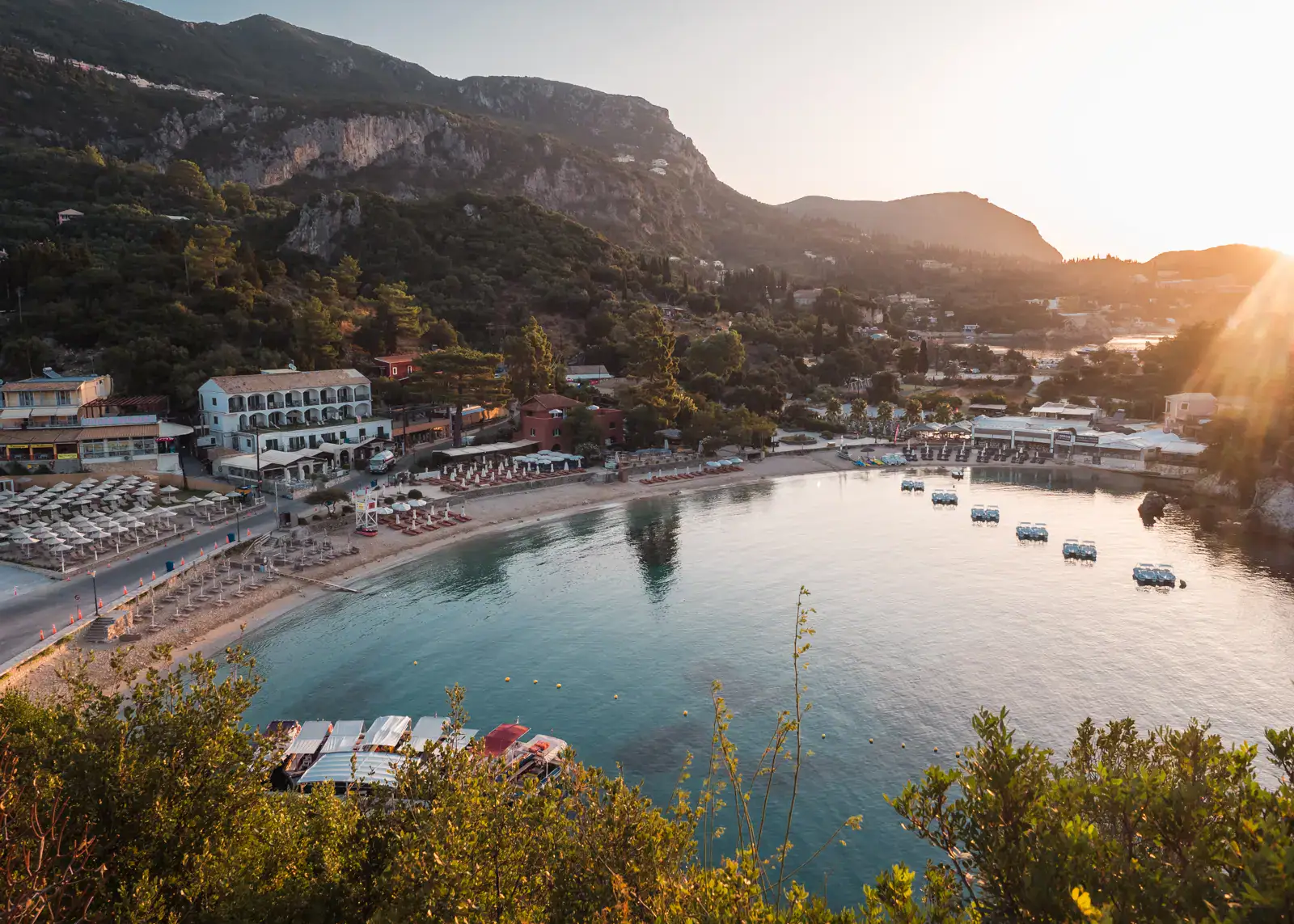
Paleokastritsa is one of the most beautiful areas of Corfu, with dramatic green hills, turquoise bays and several small beaches tucked between the cliffs. I’ve spent time here in both the busy summer season and the shoulder season, and there’s a pretty big difference.
✅ Staying in Paleokastritsa means you can have several beautiful beaches within walking distance. The scenery is gorgeous, and you can also take boat trips, go snorkeling, visit the historic monastery or walk the donkey trail up to Lakones Village. In the shoulder seasons, when the crowds thin out, I think this area is absolutely stunning.
❌ Paleokastritsa gets insanely busy in July, August and early September. I was there in August recently, and the narrow roads and beaches were packed with people and cars. The area is quite hilly, so don’t expect an easy flat stroll between all the beaches and restaurants. The water is also quite cold and the sunbeds are the most expensive I’ve encountered yet.
My top accommodation pick >> I love love love Paleo Villas, but you will need a car to get up there. I also enjoyed staying in Hotel Apollon Corfu, right on the beach.

Kassiopi
Kassiopi is a charming little fishing village on Corfu’s northeast coast, built around a picturesque harbor and surrounded by small coves and clear blue water. It balances traditional charm with high-end amenities and nearby luxury properties.
✅ Staying in Kassiopi gives you beautiful beaches, a pretty harbor and plenty of restaurants within walking distance. It’s a great choice if you want a relaxing holiday without feeling like you’re in the middle of nowhere. It’s also a good base for exploring the northeast coast, including Kalami, Kouloura and Agni, which are often called the Golden Triangle.
❌ Kassiopi is fairly far from Corfu Town, so I’d recommend renting a car if you want to explore much of the island. The beaches around the village are also mostly small pebbly coves rather than long sandy stretches, and the area can get busy during the peak summer months.
My top accommodation pick >> I love this modern and clean apartment with gorgeous ocean views. For a more luxurious option, check out the stunning Villa Valora.

Agios Georgios Pagon
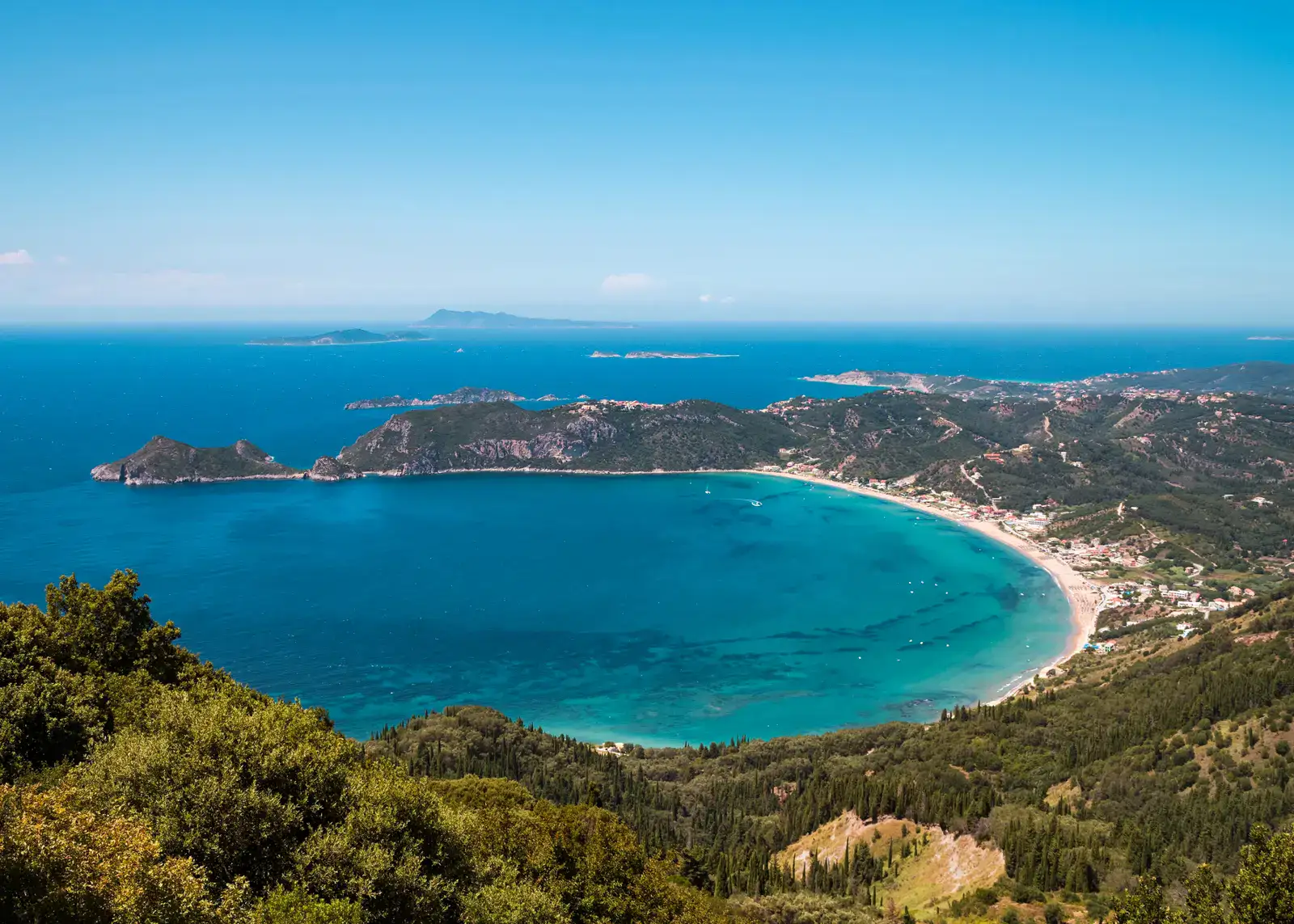
Agios Georgios Pagon is a great choice if you want a more relaxed beach holiday on Corfu’s northwest coast. And just to avoid confusion: this is Agios Georgios in the north. The long sandy beach is backed by dramatic green hills, giving the area a completely different feel from Paleokastritsa’s smaller coves.
✅ The big draw is the beautiful sandy beach, which is long enough that you don’t feel squeezed into one tiny bay. Parts are shallow, great for families, and sunbeds are reasonably priced. You’re also close to Porto Timoni, one of Corfu’s most famous beaches, which makes a great day trip if you’re up for the hike down to the twin bays. There are also many tavernas, accommodation and great walking trails to beautiful viewpoints.
❌ The downside is that Agios Georgios is quite remote, so I’d recommend renting a car if you want to explore beyond the immediate area. The road down to the resort is also narrow and windy. The water felt colder than other parts of the island.
My top accommodation pick >> Cygnus Summertime Stars, a modern and clean apartment with lovely hosts.
Sidari & Acharavi
If you’re looking for a classic Corfu beach resort holiday, Sidari and Acharavi are two of the most popular options in the north of the island. Both have sandy beaches, plenty of restaurants, cafés and shops, and all the practical amenities you need for an easy vacation. Roda, between the two, is another good option if you prefer a smaller resort feel.
✅ These areas are particularly good for families, thanks to the sandy beaches, calm(ish) shallow water in places and a wide choice of restaurants and activities. Sidari is also home to the famous Canal d’Amour, a series of sandstone cliffs and little coves that are one of Corfu’s most recognizable sights. Acharavi is a little more spread out and has a long beach, while Roda has a charming waterfront and a slightly more laid-back feel.
❌ These resorts don’t have quite the same dramatic scenery or historic charm as places like Paleokastritsa or Corfu Town. They’re also in the north of the island, so getting to many of Corfu’s southern attractions takes more time. Sidari, in particular, can feel quite busy and touristy in the height of summer.
My top accommodation pick >> Villa Solana, an affordable and newly renovated apartment in a central location.

Agios Georgios South
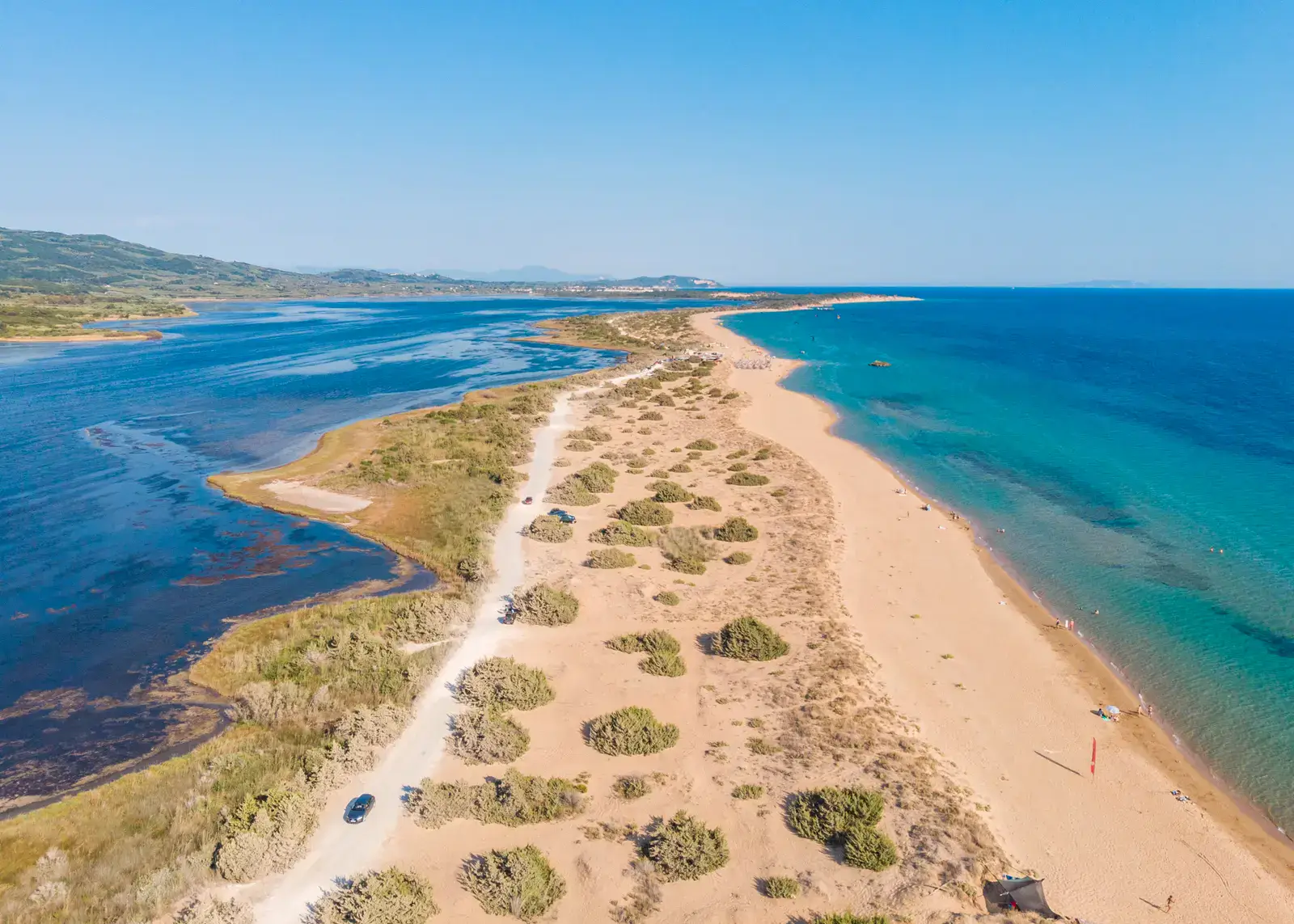
Agios Georgios South, also known as St George South or Agios Georgios Argyrades, is a relaxed beach resort on Corfu’s southwest coast. And yes, this is the southern Agios Georgios, not the one in the northwest. The area is all about wide sandy beaches, open space and a slower pace, with Issos Beach, Halikounas Beach and the beautiful Korission Lagoon nearby.
✅ The big draw is the sheer amount of beautiful sandy beach. Agios Georgios has a good stretch of sand, and you’re also close to Issos and several other long beaches, so you can easily find somewhere to spread out. I also love that the Korission Lagoon and surrounding dunes give this part of Corfu a more natural, wild feel.
❌ The downside is that Agios Georgios South is quite spread out and relatively far from Corfu Town and many of the island’s main sights. I’d definitely want a car here if I planned to explore beyond the beaches.
My top accommodation pick >> Drosoula House, a highly-rated 2-bedroom villa steps from the beach.
Pelekas
If you’re not coming to Corfu for the beach, consider staying inland in Pelekas, a traditional hilltop village surrounded by lush green countryside and olive groves. It’s only about 13 km from Corfu Town, but it feels worlds away from the busy coastal resorts. The village is known for Kaiser’s Throne, one of the best sunset viewpoints on the island.
✅ Staying in Pelekas gives you a much more local and peaceful experience of Corfu, with traditional tavernas and beautiful countryside right outside your door. It’s also close to Glyfada Beach and Kontogialos Beach, which is my favorite beach in the area. And if you don’t want to rent a car, Pelekas is surprisingly easy to reach from Corfu Town on bus number 11.
❌ You won’t have the beach right outside your accommodation, and the village itself is quite hilly. Parking can be difficult in the summer months.
My top accommodation pick >> Pelekas loft, a bright and spacious 2-bedroom apartment in the heart of the village.

Other popular areas
I haven’t included Dassia, Ipsos or Kavos as separate recommendations because, personally, I don’t love them and I don’t come to Corfu to party. But we all travel differently, so they’re definitely worth mentioning if nightlife and a livelier atmosphere are high on your list.
Dassia is a popular east-coast resort with a long pebble beach, plenty of hotels, restaurants and bars, and easy access to Corfu Town.
Ipsos, just a little farther north, has a similarly lively resort atmosphere, with a long beach, lots of restaurants and lively bars, and a good selection of water sports. Both can be convenient choices if you want a traditional resort with plenty going on.
Then there’s Kavos, down in the south, which has long been Corfu’s main party destination. It’s particularly popular with the younger crowd looking for nightlife, with bars, clubs and late-night entertainment taking center stage.
Plan your Corfu trip
📆 Best time to visit: After visiting Corfu in several different seasons, May and June, as well as late September and October, are my favorite times to go. The weather is warm enough for beach days, but you avoid the worst of the summer crowds and heat.
July and August can be extremely hot and busy. When I visited in August, we had temperatures of 38–40°C (100–104°F) every day, which made sightseeing and exploring much less enjoyable for me.
I’ve also visited in March, when temperatures were around 18°C (64°F). We had quite a lot of rain, but that is also why Corfu is so incredibly green. If you’re more interested in hiking, exploring villages and enjoying the scenery than swimming, spring can be a beautiful time to visit.
🚙 How to get around: Renting a car is the best way to explore Corfu, especially if you want to visit beaches, mountain villages and attractions away from the main resorts. Many of the places I recommend aren’t well connected by public transport, and having your own car gives you much more freedom to stop wherever you like along the way.
There is a public bus network, with the Green Buses (KTEL) connecting Corfu Town with many towns and resorts around the island. However, services can be limited depending on where you’re staying and the time of year, so I wouldn’t rely on buses if you want to explore extensively.
We’ve also used Daytrip several times in Corfu and had a really good experience. I love that you can add sightseeing stops when booking, so we used it to visit Corfu Donkey Rescue and Danilia Village along the way. Our drivers were always on time, the cars were clean, and they drove responsibly.
⏰ Don’t forget the time difference: If you’re taking the ferry between Saranda and Corfu, there’s one slightly confusing thing to remember: Corfu is one hour ahead of Albania. Yes, even though Corfu is actually west of Albania. This is, of course, because Corfu is part of Greece.
The ferry schedules are shown in local time, so pay close attention when booking your tickets, especially if you’re catching a flight or another connection in Corfu.
🌟 Read next >> How I spent one perfect day in Corfu Greece (island itinerary)




Leave a Reply